

Raise That Garden Bed!
Raised bed garden benefits are many. From vegetable gardening to flower gardens, perennial plants to a community gardens and botanical gardens, the raised bed form of gardening has many advantages.
As with most things, there are pros and cons, so we’ll cover disadvantages as well.
Raised bed gardening isn’t just easier on your back and knees… it may also be better for your garden plants! Raised beds make it is easier to protect plants from burrowing rodents like moles and voles.
There are numerous advantages to raised garden beds and they can be made out of a number of different materials. What you use and the style you choose just depends on your taste, budget and time available.
RAISED BED GARDEN BENEFITS
Why raised bed gardening?
Isn’t it easier to just plant in the ground? Well, maybe, but there are a number of advantages and benefits to raised bed gardening.
If you have lots of space to garden, in good soil and relative open and level ground, then garden rows are likely the easiest. If you like the hands off approach of no till and less work, you can try the Ruth Stout approach of deep mulch gardening.
But, if you’re considering whether to go for raised beds, here are some pros and cons.
Outline of Raised Bed Garden Benefits We’ll Cover
- EASIER – Makes gardening easier for:
- planting
- tending and maintaining
- harvesting
- HEALTHIER – Raised beds are easier on the body and especially helps save wear and tear on your:
- back
- knees
- PESTS: Elevates the bed – higher beds make it:
- harder for rabbits to access
- easier to line with hardware fabric, cardboard and other pest-resistant layers for burrowing creatures like voles.
- SOIL ISSUES – Raised bed garden benefits include a work-around poor soil issues, allowing you to:
- avoid planting in poor soil
- build up the soil in your yard and land over time
- SPACE ISSUES – Raised beds can:
- provide more grow space through elevated vertical beds
- can be built in all shapes and sizes to fit in wherever you have space
- raised planters can be placed on patios, decks and balconies
Let’s elaborate.
BETTER BACKS – Raised Bed Garden Benefits
For many people the biggest advantage is that raised bed gardening is easier on the back and body in general. The height of raised beds makes it easier and less tiring to tend the garden. Seniors and those with disabilities do well with taller raised beds that eliminate the need for squatting and bending.
POOR SOIL? Try Raised Beds!
The other big advantage to raised beds is that you can easily create a garden no matter what type of soil you have. Raised garden bed benefits include letting you grow healthy plants no matter what soil type is underfoot.
We’ll get more into raised garden beds benefits a little further below. First, let’s consider some of the various types of raised beds.
LIMITED SPACE – Raised Beds Help Conserve Space
If you have limited growing space you want to make sure you’re getting maximum production from that area. You’d be amazed what you can grow in a small space when you work with all the elements to conserve, rotate and reuse while boosting production.
Our favorite tool for planning your garden is the garden planner app which we use all the time and have also written about it.
SAVES SPACE – Raised Beds Can Be Sized to Squeeze Into Most Any Space
Some folks just use the strip of grass beside their driveway and property line or privacy fence. Others use a southern exposure wall for vertical gardening, and still others without any yard plots garden in pots and planters, on balconies and patios.
Whatever your situation, chances are there are ways to maximize your yield. A good book on that topic you may enjoy is Food Grown Right in Your Backyard, by Colin McCrate and Brad Halm.
GARDEN PESTS – Raised Beds Can Help With Furry Garden Pests
Raised bed gardens helps protect your crops from critters. With raised garden beds it’s easier to fend off furry offenders.
Types of Raised Bed Gardens
There are many sizes, shapes, styles and types of materials for raised garden beds. Some examples include natural stone walled beds, lumber, concrete blocks as well as mortarless interlocking blocks that require no cutting of lumber or nails and screws.
What follows are some of the many options available for creating your own raised garden beds. These are listed in alphabetical order. If you don’t see your favorite kind of raised beds here, please let us know. We’d love to learn from your experience and add that here.
Barrels for Raised Bed Gardening
Some people love the barrel method, especially if they already have ready access to 55 gallon drum barrels for free or for cheap.
Others, hate the idea of plastic.
Advantages of 55 Gallon Barrel Gardens
- Less time to set up, so your garden is ready in less time.
- Easy to customize the height to be a perfect fit for you.
- Can reuse year after year.
- Easy placement – can fit into available spots, singularly or in clusters
If you like the idea, but don’t have the barrels, one way to find some is to search Craigslist and Google. Try googling “55 gallon drums”, [your city], [your state] or “near me””, and you should come up with some sources for these.
55 gallon drums are a popularly searched item because they do have many beneficial uses. One of the favorites is for raised bed gardening. Place these on stands for your perfect height, add soil and plants and you’ve got a garden!
Uses for 55 Gallon Drums
- Raised garden beds out of 55 gallon drums –
- Earthboxes – self contained garden systems
- Aquaponic systems
Hugelkultur Beds
Hugelkultur raised beds are especially good if you’re in or near the woods with lots of felled tree limbs and woodsy debris. They may look a bit unkempt, but it’s the most rich and natural growing environment that builds up nutrients and resources over time.
You can read more on huglekultur here.

Interlocking Concrete Blocks for Raised Beds
Any kind of interlocking concrete blocks are great for sturdy raised bed gardens. These are especially good for a strong DIY landscape gardener with a good back, because the blocks are heavy. However, these fit together well… kind of like adult gardener Lincoln Logs, and make for a substantial garden bed that can last for years to come.
We installed ours in our home landscape around 30 years ago and we’ve never had to do anything to the walls.
Benefits of Interlocking Concrete Raised Beds
- Sturdy and long lasting for years to come
- Good for extending and rounding out a slope or hillside growing area
- Requires no sawing, drilling, hammers, nails or screw.
- Fewer Materials: blocks and metal pins and possibly soil retention fabric

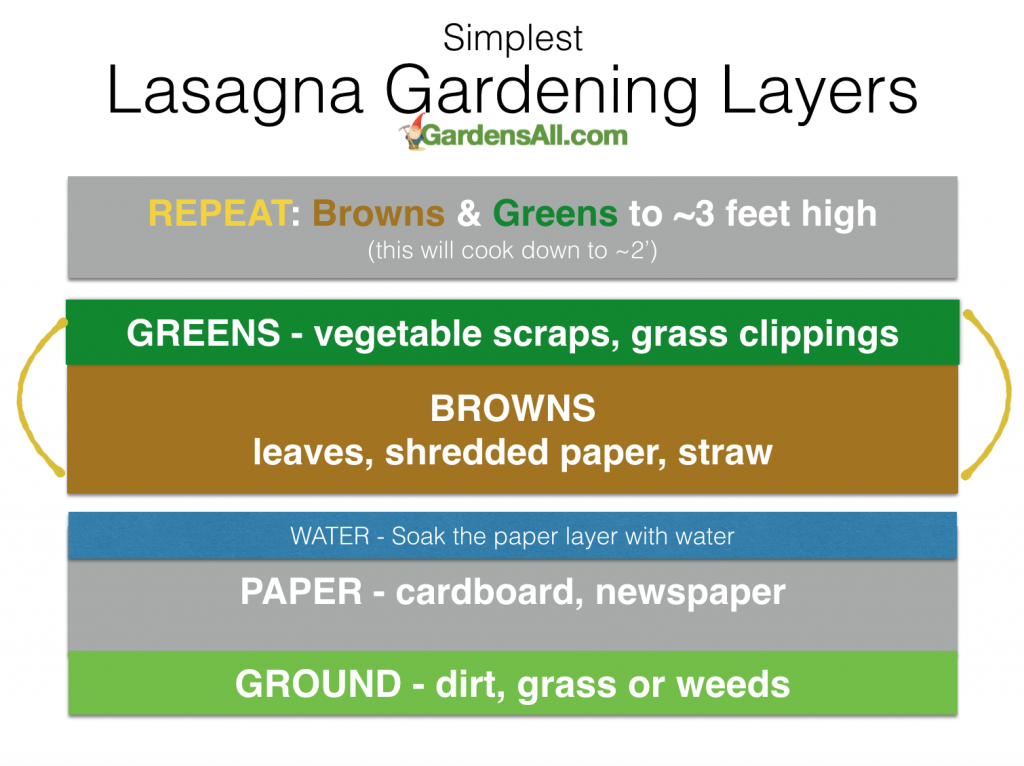
Lasagna Gardening Method
The lasagna garden method is not that tall but can definitely have a mounded raised garden feel.
Find more on layers of raised garden beds, lasagna gardening and layered garden beds methods
Stone Wall – Landscape Garden Raised Beds
Stone walls are beautiful additions to yard and garden landscapes. They showcase herb and flower gardens beautifully as well as specimen plants like Japanese red maple trees.
